


Expanding the Horizons of Islamic Scholarship
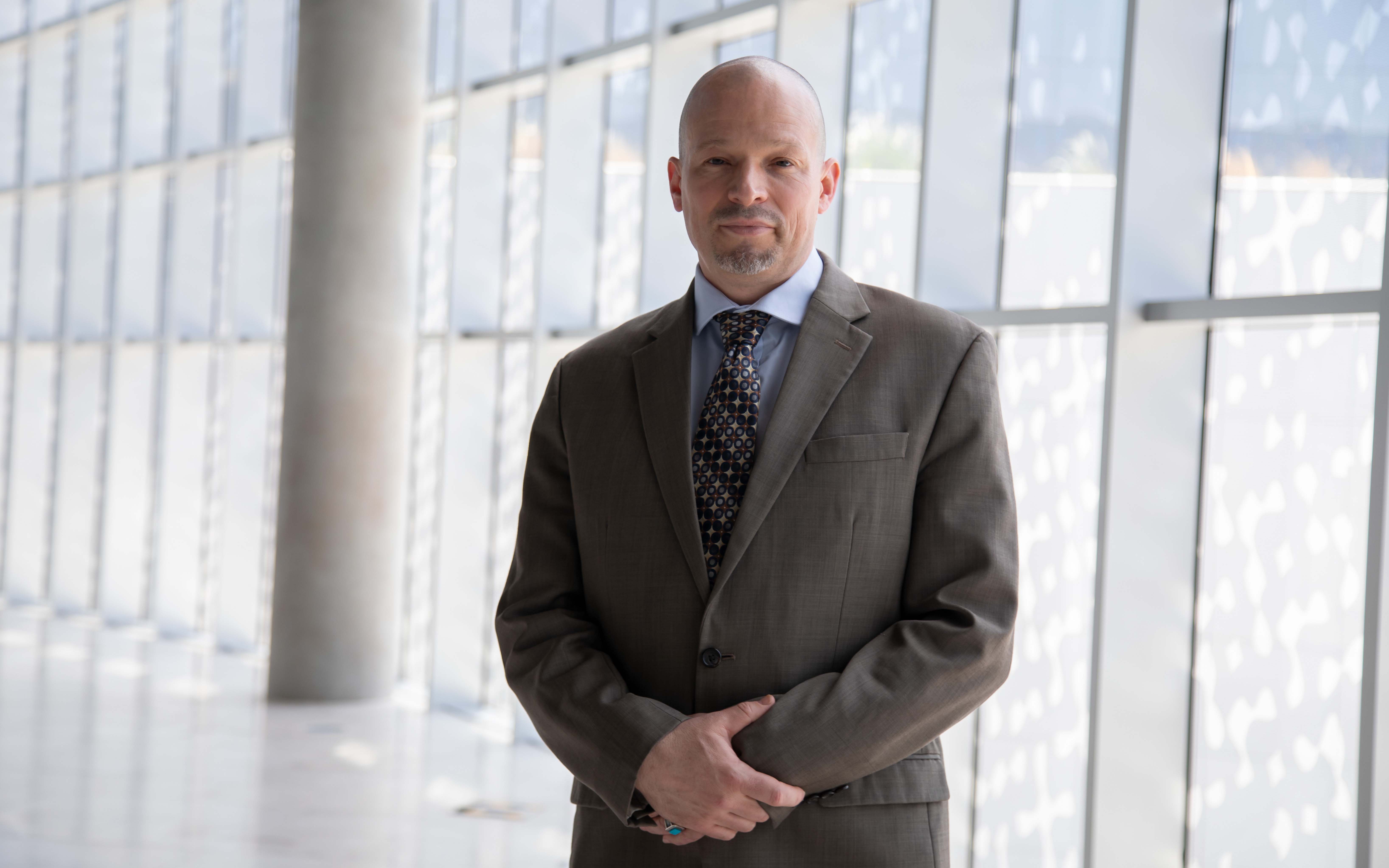
Bayan welcomes Dr. Zachary Wright as a visiting professor, bringing internationally recognized scholarship in Islamic intellectual history and West African Islam to our academic community.
This appointment reflects Bayan’s ongoing commitment to connecting students with distinguished scholars whose work expands our understanding of the breadth and diversity of the Islamic intellectual tradition.
Welcoming Dr. Zachary Wright to Bayan
Dr. Wright serves as Professor in Residence, Associate Dean for Faculty Affairs, and Director of the Institute for the Study of Islamic Thought in Africa at Northwestern University. His appointment creates meaningful new opportunities for academic collaboration, graduate research, and engagement with Islamic intellectual traditions that have often remained underrepresented in contemporary scholarship.
Recovering a Rich Intellectual Heritage
For centuries, West Africa has been home to vibrant centers of Islamic learning, producing theologians, educators, jurists, and spiritual masters whose scholarship shaped Muslim societies across the world. Yet despite this remarkable legacy, West African intellectual history has often remained underrepresented within contemporary Islamic studies.
Recently, Dr. Wright taught Islam in West Africa: History, Identity, and Religious Expression, introducing Bayan students to influential traditions of Islamic scholarship across the region.
Through decades of archival research and engagement with Arabic manuscripts preserved throughout West Africa, his work has helped recover the sophisticated scholarly networks, educational institutions, and spiritual traditions that flourished across the region. This scholarship is reshaping how researchers understand Islam’s global intellectual heritage.
Opening New Pathways for Bayan Students
Dr. Wright also leads Northwestern University’s Institute for the Study of Islamic Thought in Africa, known as ISITA. The institute is dedicated to preserving, studying, and expanding access to one of the world’s richest collections of Arabic manuscripts and primary sources documenting African Islamic intellectual history.
ISITA serves as a global hub for scholars exploring the literary, legal, theological, educational, and spiritual traditions of Muslim Africa.
Scholarship in Service of Faith and Society
A defining feature of Dr. Wright’s scholarship is his exploration of how West African religious orders responded to the political and social upheavals of the nineteenth and twentieth centuries.
His research demonstrates that these communities were not isolated spiritual movements. They were centers of scholarship, education, and ethical leadership that helped preserve Islamic learning, strengthen communal institutions, and cultivate moral resilience during periods of colonial expansion and profound social transformation.
As colonial rule reshaped much of Africa, these intellectual traditions continued to influence educational reform, community organization, religious renewal, and the emergence of post-colonial Muslim societies throughout the twentieth century.
Dr. Wright’s work reveals that scholarship, spiritual formation, and public leadership were deeply interconnected. Together, they enabled Muslim communities to preserve their faith, identity, and institutions while navigating extraordinary political and cultural change.
A Broader Vision of Islamic Scholarship
Dr. Wright’s scholarship offers an important reminder that the Islamic intellectual tradition has always been both deeply rooted and globally interconnected.
By bringing this perspective to Bayan, he not only enriches the classroom experience but also invites students to engage with a broader vision of Islamic scholarship, one that continues to inform contemporary conversations about leadership, education, ethics, and community.
More importantly, this relationship reflects Bayan’s commitment to cultivating scholars who do not simply inherit the Islamic tradition, but actively participate in its continued study, preservation, and renewal.